
BRAIN Lab · CIRC · MSU Department of Radiology
Unlocking the brain with AI & imaging
The BRAIN Lab turns multimodal brain images into meaningful biomarkers of aging, resilience, and neurodegeneration.
Overview
From imaging signals to actionable biomarkers
We operate at the intersection of medicine, computer science, and neuroscience — developing methods to unravel the mechanisms of brain aging and neurodegenerative disease, and to pave the way for earlier diagnosis across the lifespan.
Signature method
Dimensional Complexity
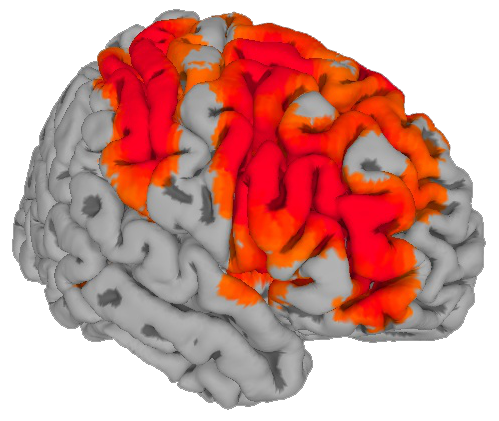
Resting-state fMRI reveals the brain's intrinsic functional networks (below). Dimensional Complexity quantifies exactly how those networks interact and reorganize — turning their dynamics into a biomarker of brain health.
We are developing and validating Dimensional Complexity (DC), a novel resting-state fMRI biomarker that quantifies the dynamic organization of these networks. DC is sensitive to healthy aging and more reliable than standard connectivity measures — and can track recovery from brain injury more effectively than traditional methods.
Crucially, we have linked our fMRI methods directly to Alzheimer's pathology, showing that local BOLD signal fluctuations are significantly correlated with brain amyloid-β deposition in patients with Mild Cognitive Impairment.
Landmark clinical trials
Leading imaging analysis
 NIH-funded
rrAD — Risk Reduction for Alzheimer's Disease
Our lab leads the neuroimaging analysis for this landmark trial, with PI Norman Scheel serving as its Primary Imaging Data Analyst, together with David Zhu (Albert Einstein College of Medicine, Bronx, NY). The trial investigates whether aerobic exercise and intensive vascular risk reduction can prevent dementia in older adults at high risk for Alzheimer's.
 NIH-funded
IPAT — Intensive Blood Pressure & Aβ / Tau
Our lab leads the neuroimaging analysis for IPAT, with PI Norman Scheel serving as a Co-Investigator and its Primary Imaging Data Analyst, together with David Zhu (Albert Einstein College of Medicine, Bronx, NY). The study aims to determine whether intensive treatment of high blood pressure can reduce the accumulation of amyloid and tau, core pathological hallmarks of Alzheimer's.
Where the BRAIN Lab sits
The BRAIN Lab is a member laboratory of the Cognitive Imaging Research Center (CIRC), MSU's hub for human neuroimaging. We acquire imaging data through the CIIGT core ↗, home of the Siemens Biograph One PET/MR.
Prospective researchers
The BRAIN Lab has no open positions or active searches at this time. We nonetheless welcome inquiries from prospective graduate students and postdoctoral researchers with a strong interest in computational neuroimaging and AI, and encourage interested candidates to reach out →